

The site logbook that fills itself.
The site engineer reports over WhatsApp at the end of the day. Paladio records the folio, computes progress against plan and leaves the file ready to sign — and to audit.
For those who run the project — and those who commission it:
From the daily folio to an auditable file.
Three pieces working on the same data: what the site engineer reports today is what the owner approves next month.
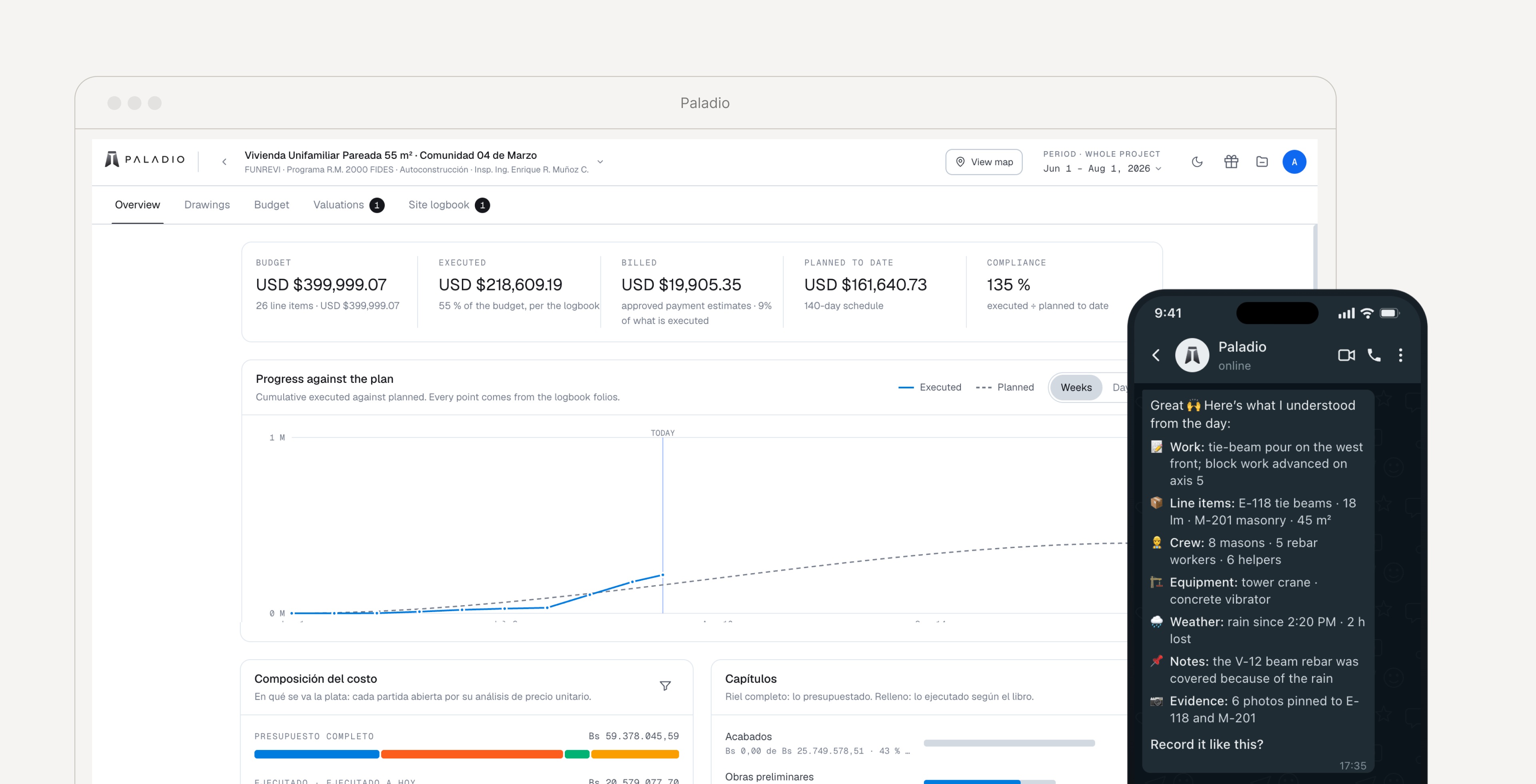
The site log fills itself, over WhatsApp
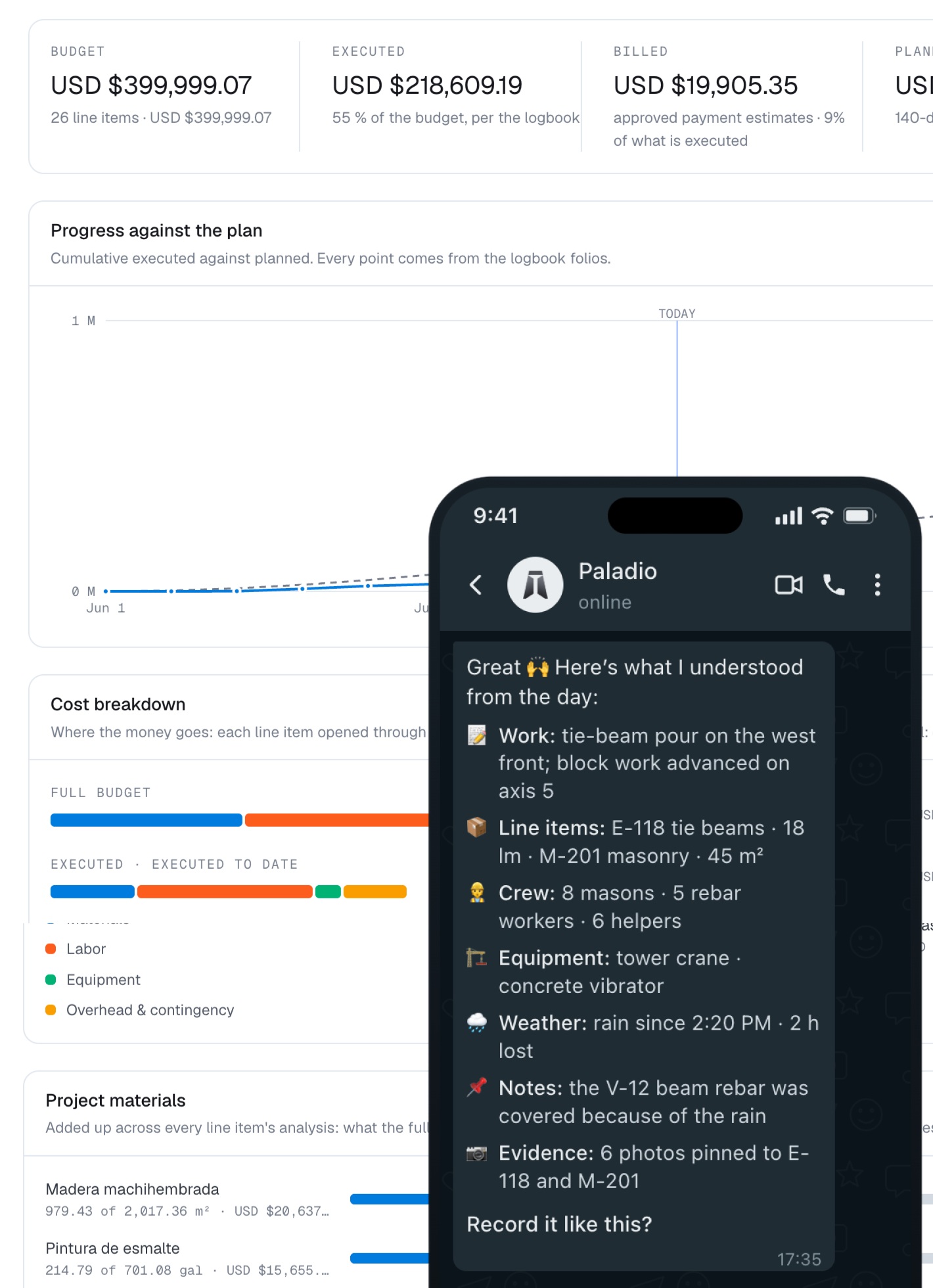
 Paladio online
 Great 🙌 Here’s what I understood from the day:
- Work
- tie-beam pour on the west front; block work advanced on axis 5
- Line items
- E-118 tie beams · 18 lm · M-201 masonry · 45 m²
- Crew
- 8 masons · 5 rebar workers · 6 helpers
- Weather
- rain since 2:20 PM · 2 h lost
- Evidence
- 6 photos pinned to E-118 and M-201
Record it like this?
The owner’s portfolio live, with every payment backed
The digital twin ties the drawing to what gets billed
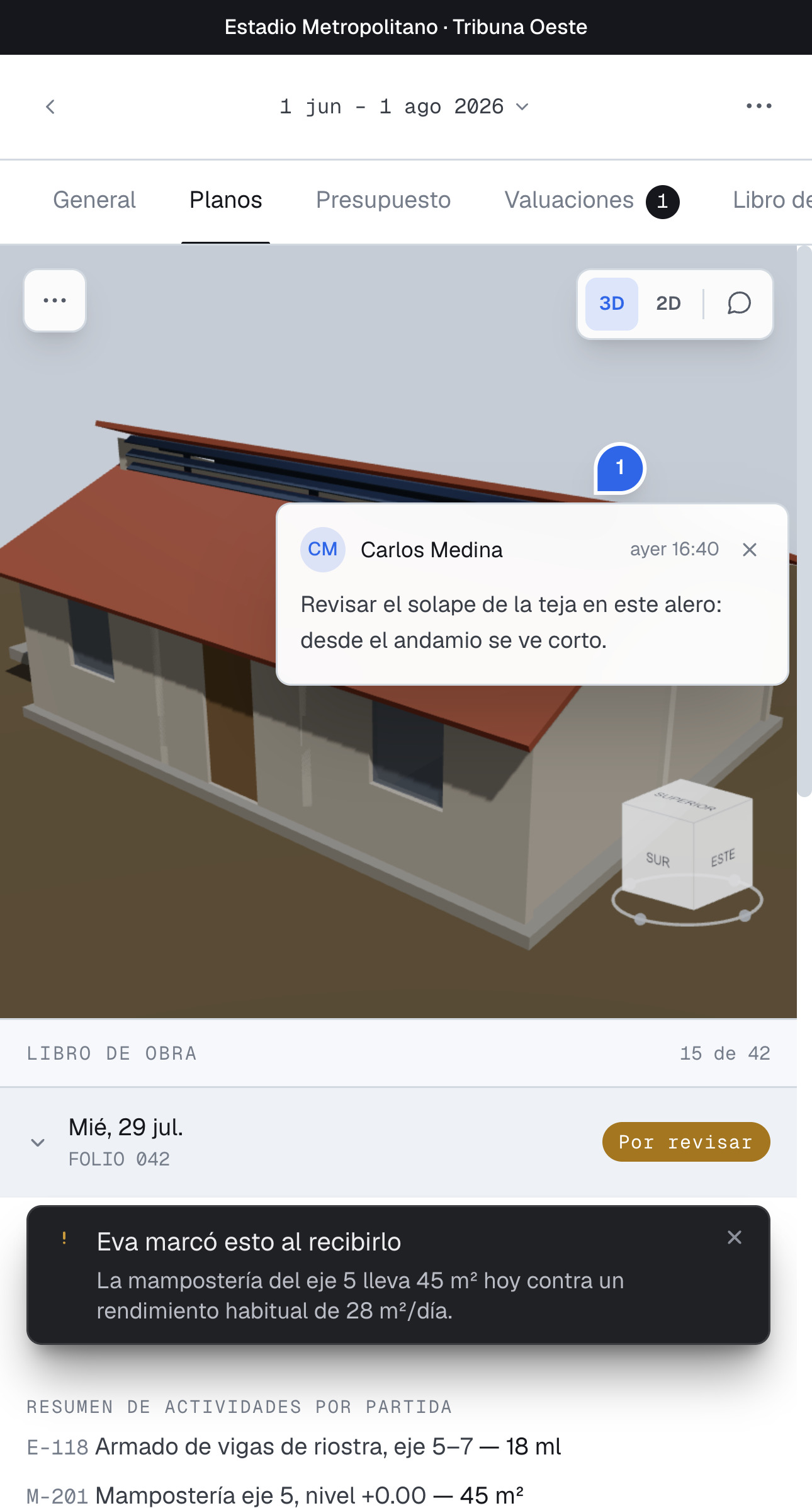
From the evening report to the signed file.
One site day in Paladio, step by step — with nothing to retype.
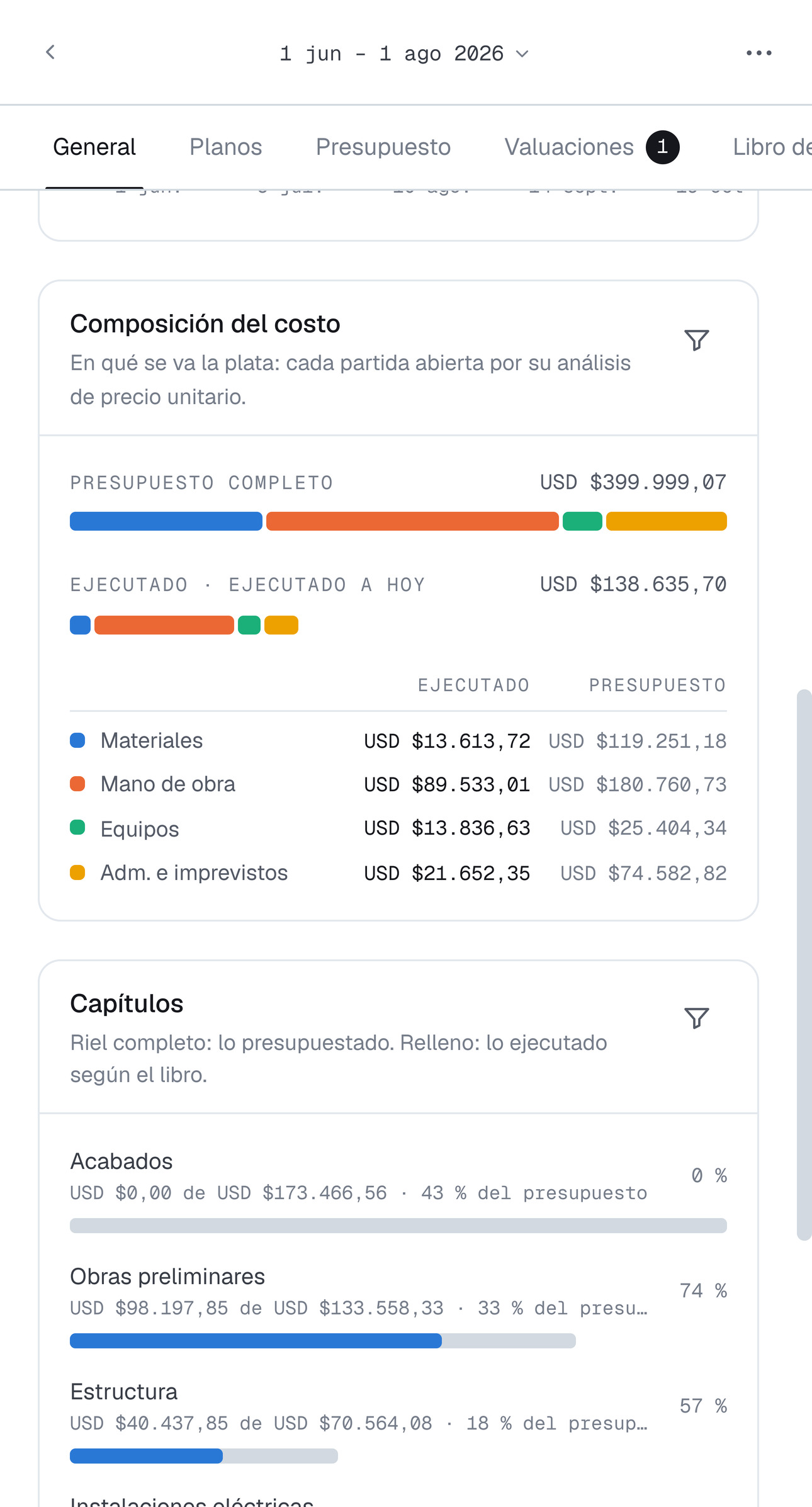
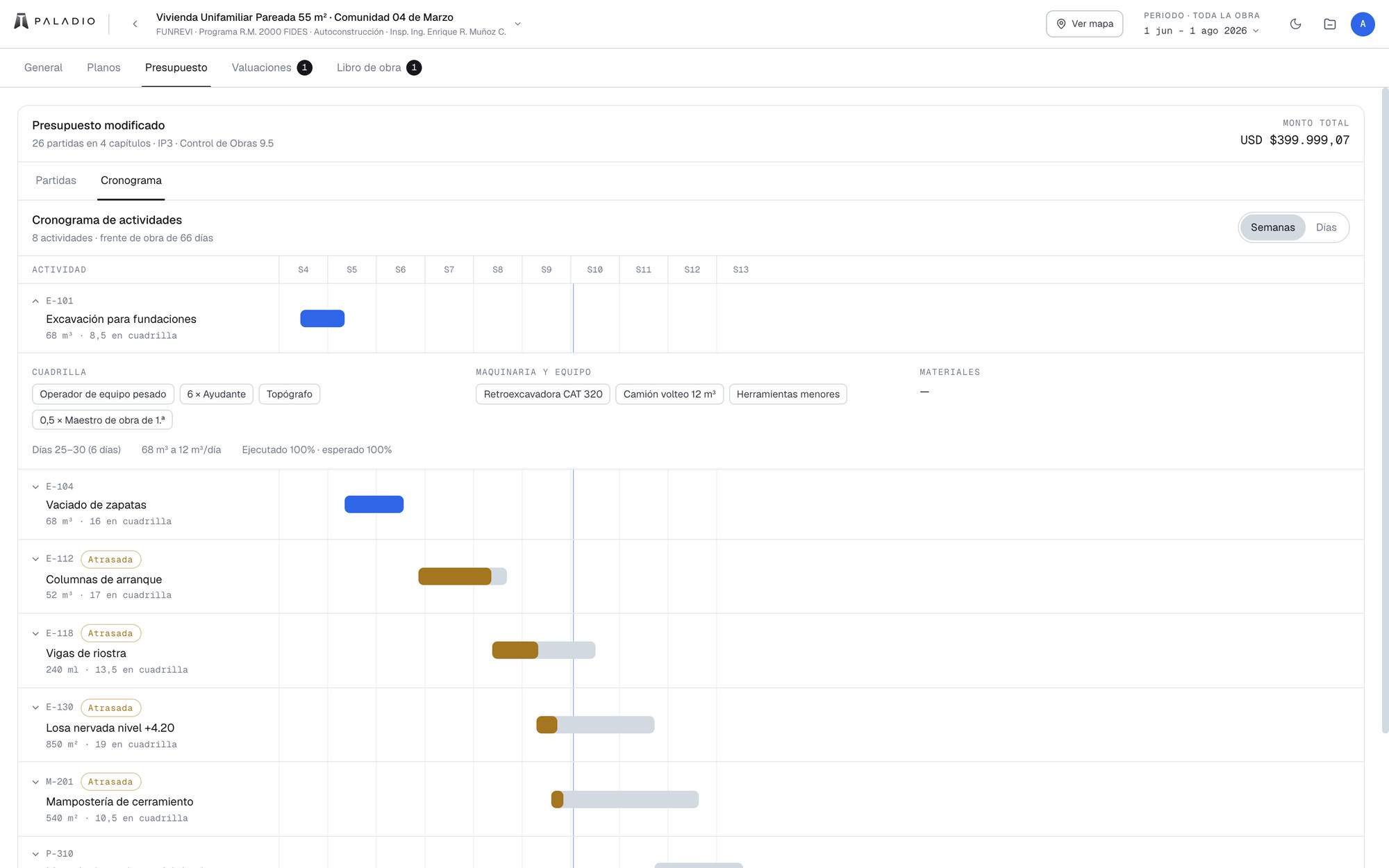
Current with the site. Today’s folio has already moved progress and cost.
Purchasing knows what to order. Material is drawn down as the work advances.
Every project, its own. Its budget, line items and schedule, never mixed.
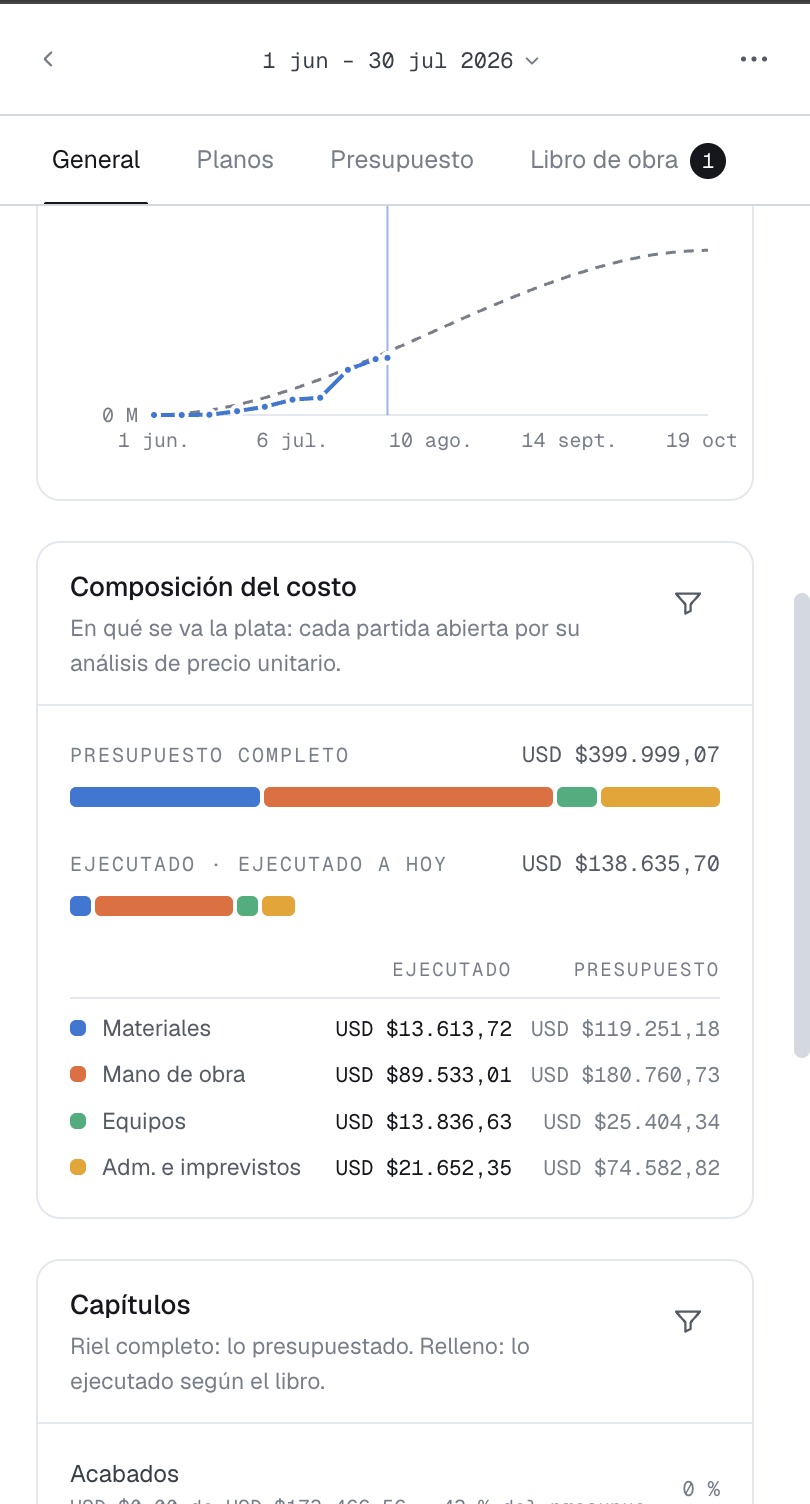
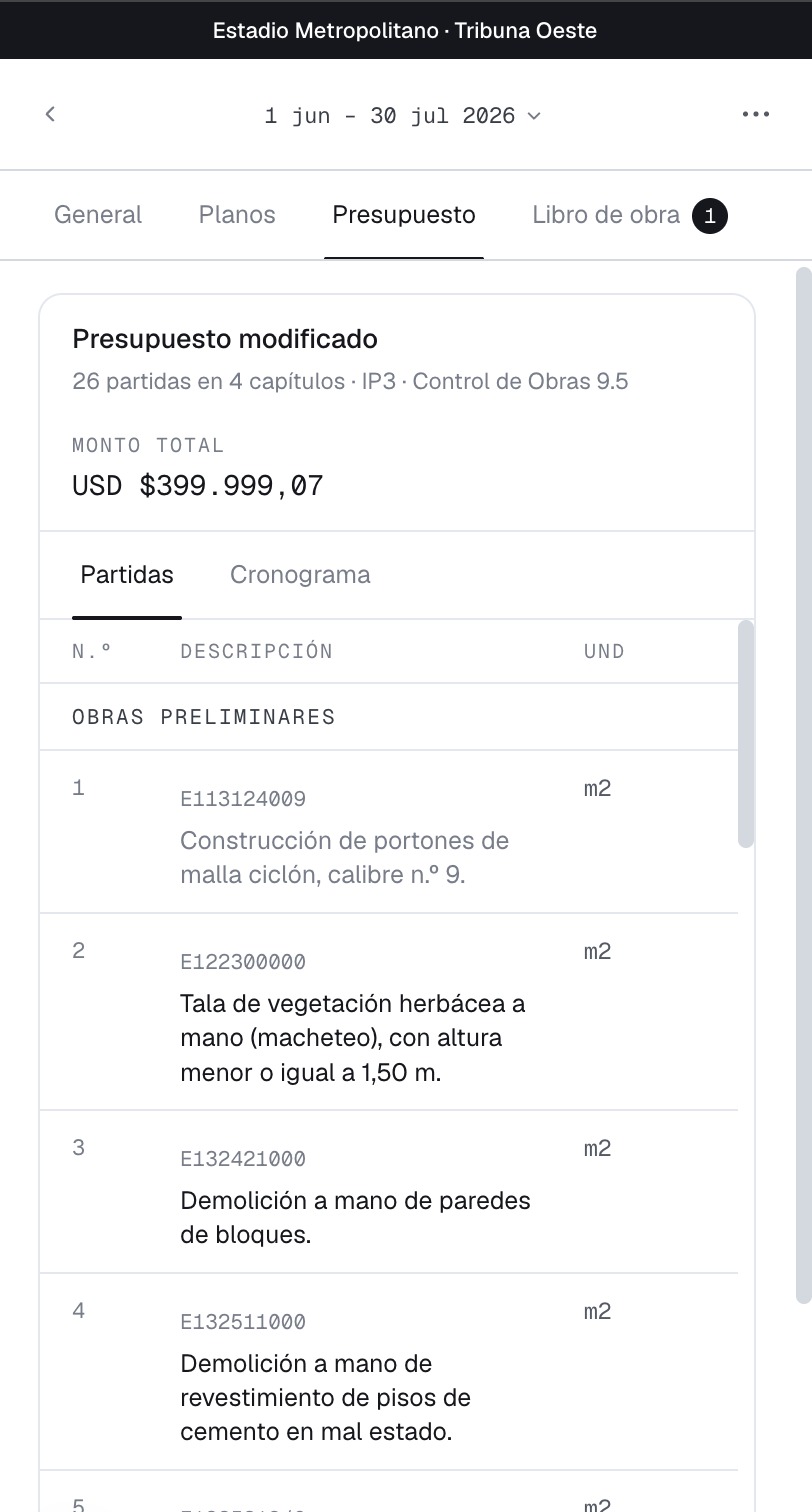
The site logbook gets written twice. From today, once.


Poured 12.4 m³ in columns C-12

Folio 042 signed, on plan

How many concrete columns are left?

How are we doing against this week’s plan?

Estimate 3 approved: releasing payment
The day ends on site.The day was signed where it happened, so there is no second shift at the office to type it again. The team closes up and leaves.
Meet the site logbookNothing is copied, nothing is lost.Every copy of a figure is a chance to get it wrong and a day of delay. What was dictated on site is what reaches the file, with no steps in between.
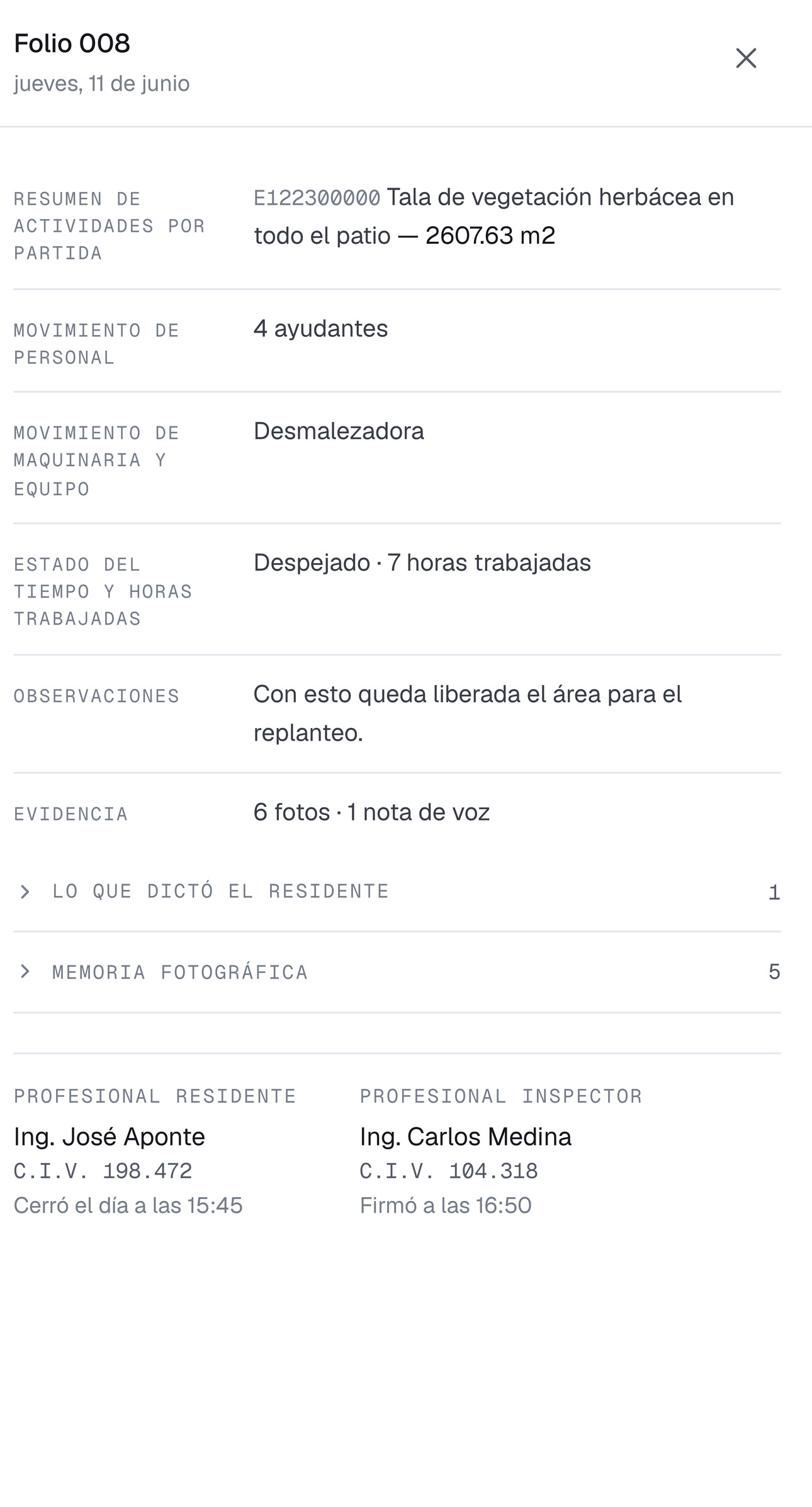
How a folio is recordedA file that cannot get wet.Folios and approvals signed with a license number and a one-time code, timestamp and content hash — with legal validity across the region.
Signature validityThe tools you already use, connected.
The project keeps working the way it works: Paladio reads what it already produces — from drawing to budget, from chat to price analysis.
AutoCAD
DWG drawings come in layer by layer and become the project’s visual base: every sheet and every storey, nothing redrawn.
Revit
BIM models come in as IFC, the open format: each element’s geometry and data, ready to link to its line items.
Excel
The itemized budget is read as-is: codes, quantities and unit prices, in the file’s thousands-and-decimals format.
The channel of the daily report. The engineer learns no app: he answers the chat already in his hand, with voice and photos.
IP3
Budgets and unit price analyses in the format Venezuelan cost engineering already uses. Uploaded once, kept alive.
Built for civil engineering that commands respect.
The same structure —chapters, line items and folios— scales from a rural school to a hydroelectric plant without switching tools.

Cable-stayed, suspension, arch.
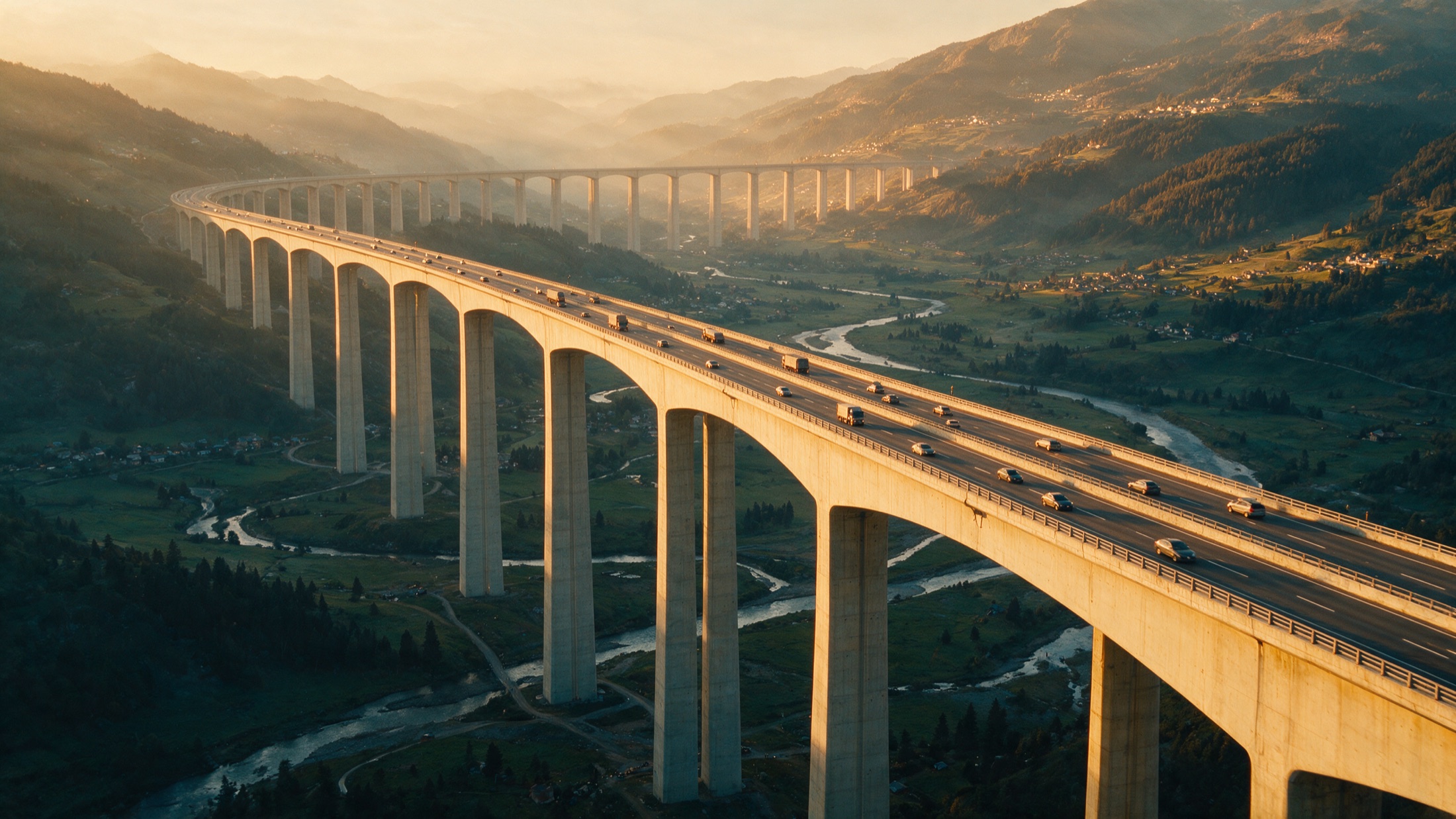
Kilometres of deck and piers.
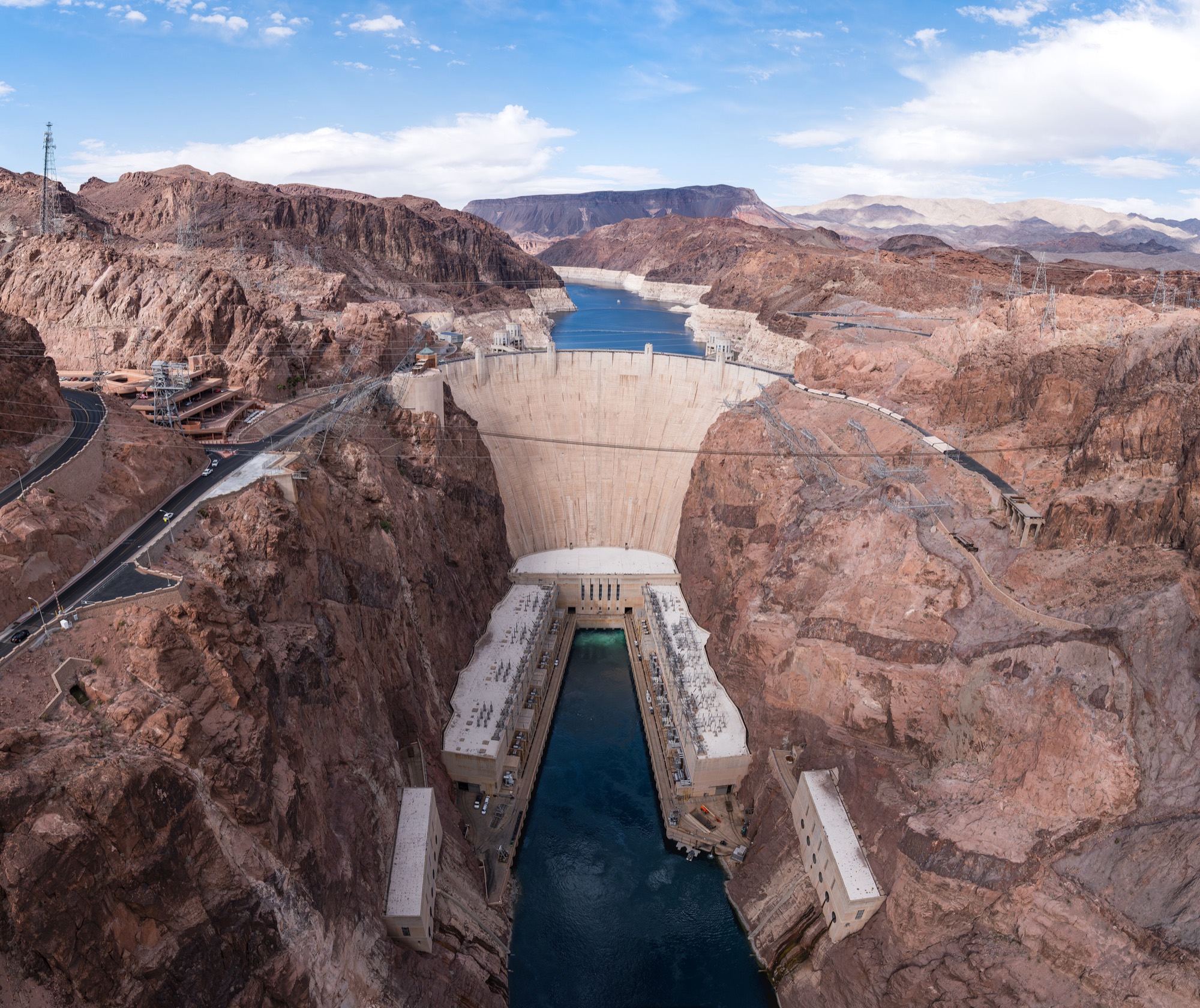
Dams, spillways, powerhouses.

Highways, interchanges, tunnels.
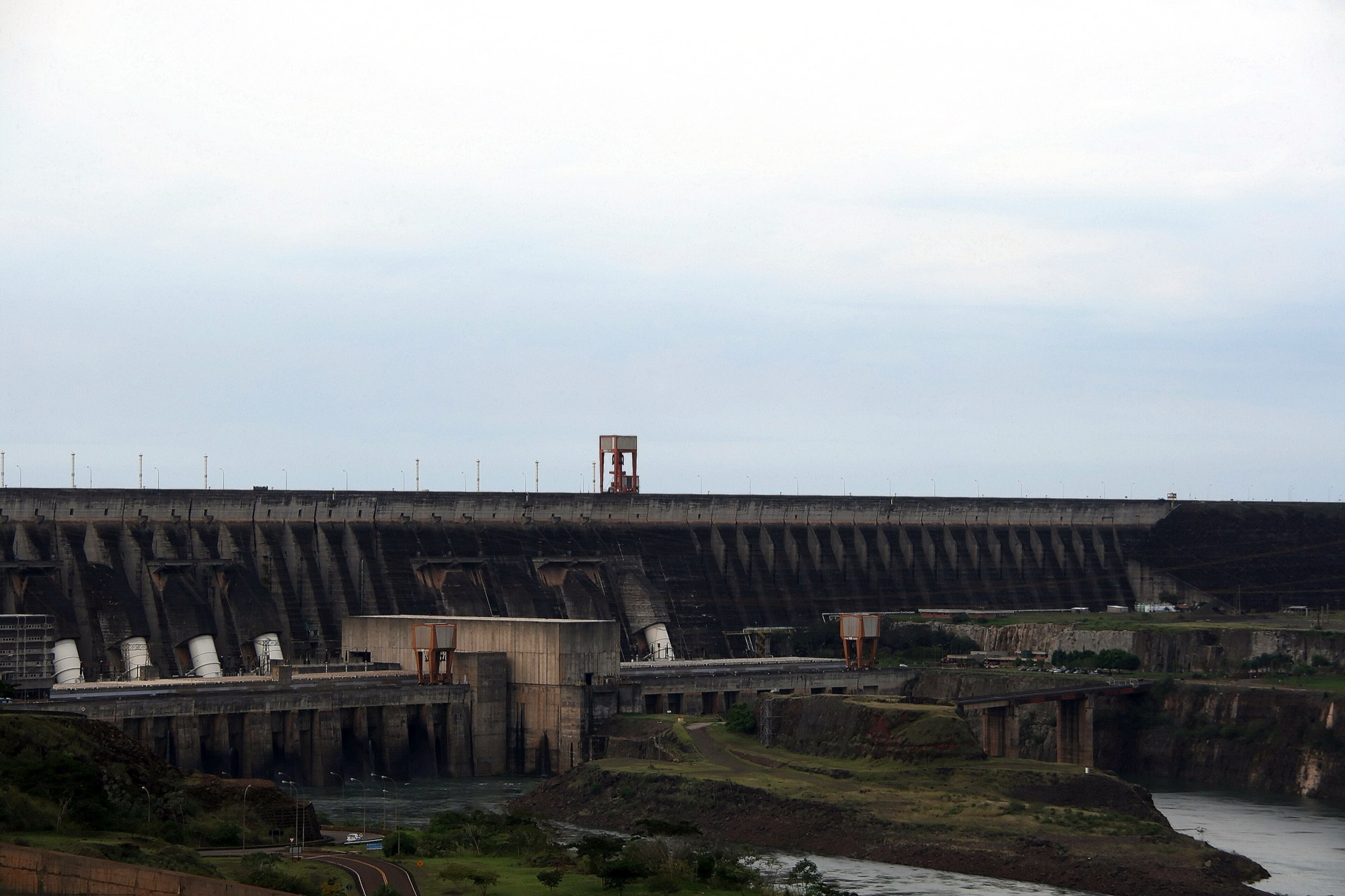
Binational megaprojects.

Process plants, refineries, tank farms.

Towers, hospitals, schools, stadiums.
Traditional control stops short. Paladio goes further.
Every folio and approval is sealed with the professional’s license number, timestamp and content fingerprint — backed by legal frameworks across the region.
Progress against plan, cost composition and per-item consumption come from signed folios: the deviation shows the next day, not in the closeout audit.
Sequential like the paper book: who recorded, who signed and on what evidence — with real-time read-only access for comptrollers and funders.