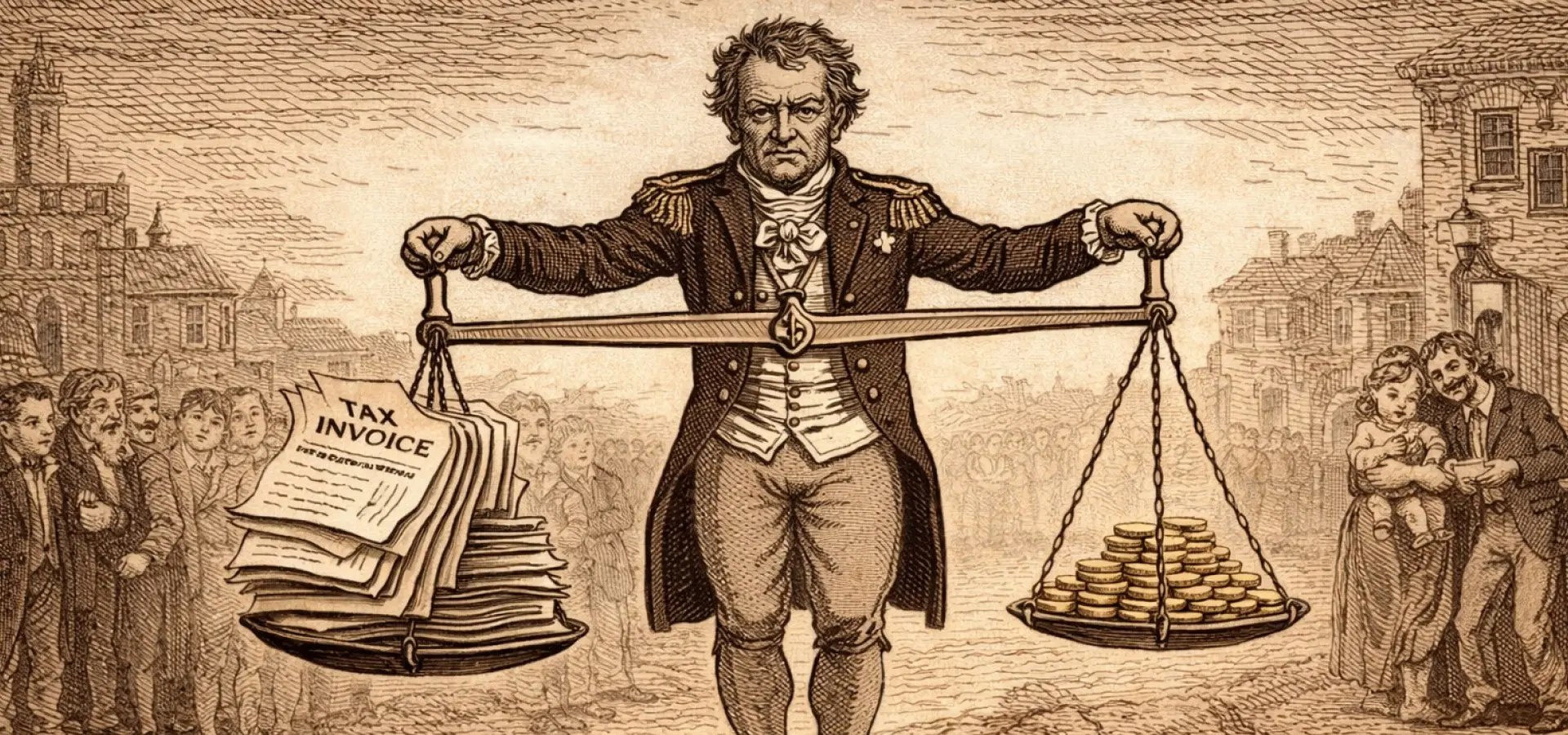

Cost adjustment on Mexican public works: when it applies and how it is calculated
Last reviewed: Regulations change: the text is checked against the official source at each review.

Cost adjustment — the escalatoria — is the mechanism that recognises the contractor's increase or decrease in the cost of work not yet executed, when economic circumstances not foreseen in the contract occur. On Mexican federal public works it is governed by the Ley de Obras Públicas y Servicios Relacionados con las Mismas.
It is one of the areas where the most money is left on the table, and almost always for the same reason: the contractor does not file in time, or does not gather the backup at the moment the increase occurs.
When it applies
The test is specific and worth reading closely: it applies when, from the submission of bids onwards, economic circumstances not foreseen in the contract occur that cause an increase or a decrease in the cost of work not yet executed under the agreed schedule.
Three elements, and all three matter:
“From the submission of bids onwards.” The baseline date is not the signing of the contract nor the start of work. It is the moment you built your prices.
“Not foreseen in the contract.” If the contract already provides an updating mechanism for that input, there is no adjustment to recognise.
“Work not yet executed.” The adjustment is not retroactive over what you have already billed. It applies forward, over the balance pending under the schedule.
That last point has a consequence many discover too late: the adjustment is calculated over what is pending under the agreed schedule, not over what you actually have left. If you are behind for reasons attributable to you, the adjustment is calculated over the original schedule, not over your reality. If the delay is not attributable to you and there is an agreed revised schedule, that one is used.
The three procedures
Article 57 of the LOPSRM sets out three routes.
Section I — Review of each unit price. The unit price is reviewed item by item to obtain the adjustment. It is the most precise procedure and the most laborious.
Section II — Review by price group. Unit prices are grouped and reviewed by group, which cuts the work while staying reasonable.
Section III — Updating by input proportion. Where the agency has established the proportion in which inputs make up total direct cost, the adjustment may be determined by updating the cost of the inputs involved in those proportions.
On that last route there is a protection worth knowing: if the contractor disagrees with the proportion of input participation or with how it is measured during construction, they may request a review so that it is corrected; and failing agreement, the Section I procedure applies.
In other words: Section III is the fast lane, but if the proportion the agency set works against you, you have the right to take it to a price-by-price review.
Who has to file it
This is the most important part of the article and where the most money is lost.
For the Section I and Section II procedures, contractors are responsible for filing the cost adjustments, so that the agency reviews them, requests corrections where appropriate and issues its determination.
Nobody is going to come and offer you the adjustment. The burden of filing sits with the contractor. And because it is a right that has to be exercised, it has a form and a deadline: without the request filed together with its study, there is no adjustment to determine.
Many mid-sized firms simply never file, because the process looks heavy and the outcome uncertain. In periods of material inflation, that omission can cost more than the project’s entire margin.
What the study contains
The file submitted for review normally includes:
- Price indices applicable to the period
- Budget of the work pending execution
- Execution schedule against which what is pending is determined
- Analysis of the adjustment factor or factors
- Updated unit price breakdowns
The indices are the technical piece. Mexico’s national statistics institute produces the national price indices, and they are the reference used to determine the increases. Choosing which index applies to which input is where most of the agency’s observations concentrate.
Rules of application
Article 58 sets out how the procedures are applied. Two rules worth keeping in mind.
Adjustments are calculated from the month in which the increase or decrease in input cost occurred, in respect of the work pending execution under the execution schedule agreed in the contract or, where there is a delay not attributable to the contractor, under the revised agreed schedule.
And on the advance payment: the amounts resulting from cost adjustments generated during the budget year do not receive an advance.
The mistakes that cost you the adjustment
Not documenting the baseline date. Without clarity on the bid submission date and on the prices as of that date, the starting point of the calculation is arguable.
Not keeping the revised agreed schedule up to date. If you are behind for reasons not attributable to you but never formalised a revised schedule, the adjustment will be calculated over the original one and you will lose the share corresponding to the period of someone else’s delay.
Filing late. The right exists, but the process has deadlines and contract closeout narrows the window. An adjustment filed at the end, over work already executed, does not apply.
Not recording economic events in the bitácora. An input price increase is a verifiable fact; the context in which it hit your project, less so. A contemporaneous record strengthens the backup.
Choosing indices for convenience. The agency is going to check. A badly applied index turns the study into a discussion about your credibility rather than about the amount.
Frequently asked questions
- Does cost adjustment apply to private construction?
- Not by law. On private work it exists only if the contract provides for it. It is one of the most valuable and most frequently omitted clauses in private construction contracts: without it, the entire input-inflation risk sits with the contractor.
- Can the adjustment be negative?
- Yes. The mechanism recognises both increases and decreases. In periods of falling input prices, the agency may determine a downward adjustment.
- Does the adjustment apply to overheads and profit?
- Article 57 refers to the adjustment of direct costs. How the other components of the price are treated depends on the procedure applied and on what the Regulation and the contract establish. It is a technical point worth reviewing case by case.
- What if the agency never issues its determination?
- Keep proof of filing with an acknowledgment of receipt and record the lack of response in the bitácora. The deadlines and the effects of silence depend on the applicable rules and on the contract; verify them before assuming a favourable outcome.
- Is it worth hiring someone to build the study?
- On projects of a certain size, almost always. The study is technical and a poor filing stretches the review out for months. The specialist's fee is usually a fraction of the adjustment in dispute.
Founder and CEO of Paladio. He has spent more than 15 years building financial products that touch the lives of millions of people. He writes about what he sees on site: how progress is really measured and where the money leaks.
See all their articles →